
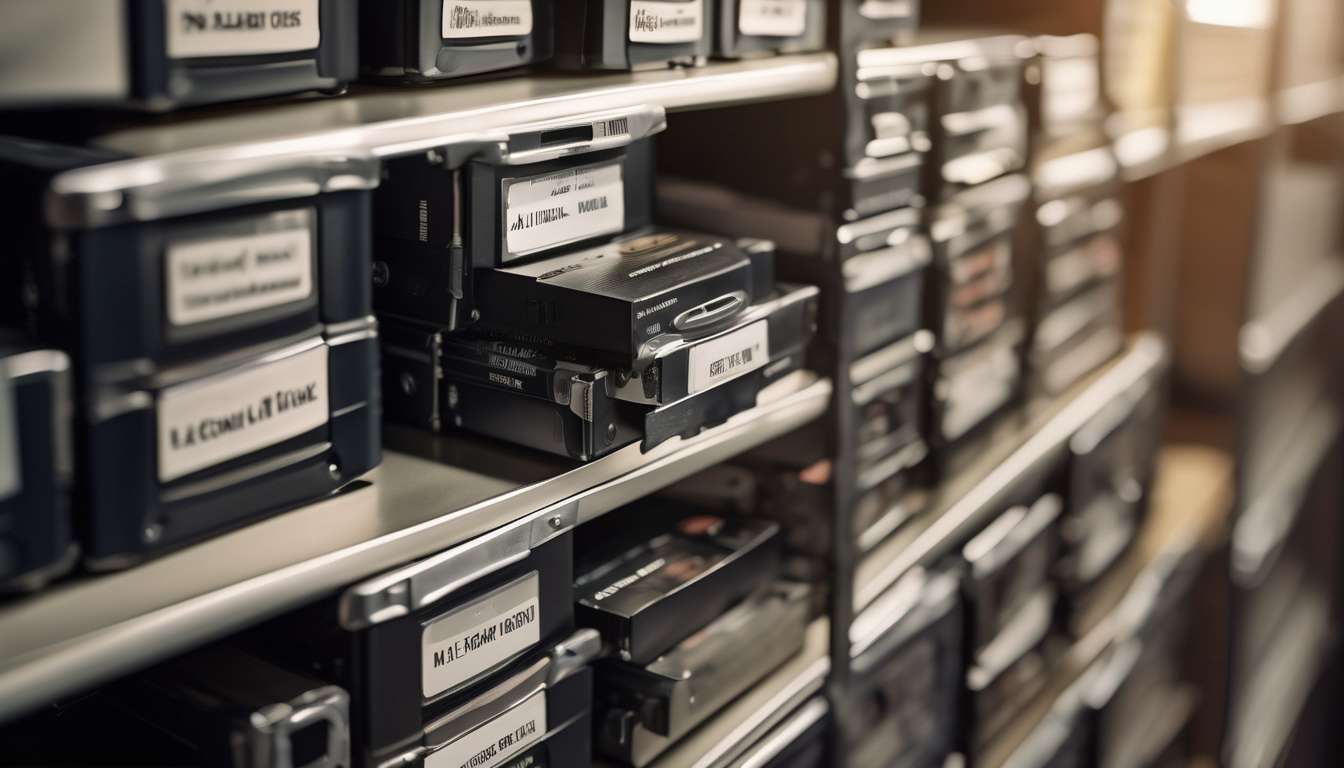
I remember the night we unlocked the metal cabinet and found cardboard boxes labeled with dates, performer names, and handwritten notes that mapped an entire era of our industry.
We had expected tapes and invoices, but the folders revealed stories:
- Contracts that charted payment negotiations.
- Marketing flyers that traced shifting aesthetics.
- Ledger books that documented the rise and fall of studios.
As archivists and former producers, we realized these records do more than catalog transactions—they preserve labor histories, regulatory pressures, and the informal economies that sustained performers.
We also recognized the fragility of this material, vulnerable to decay, legal erasure, or deliberate destruction.
In this article, we examine how robust archive systems can safeguard adult video business records, balancing privacy, access, and historical integrity.
Our aim is to offer practical strategies for organizing, digitizing, and ethically stewarding collections so that future researchers and communities can understand this complex cultural and economic landscape.
Historical Value
We preserve these adult video business records because they document the industry’s evolution and illuminate broader social, legal, and technological changes.
We view adult archives as community memory, and we center shared stewardship so everyone contributing feels included and respected.
By organizing holdings, we trace production patterns, distribution shifts, and audience engagement across decades, and that context helps us interpret cultural trends responsibly.
Our digitization workflow prioritizes integrity and accessibility:
- We standardize metadata.
- We batch-process transfers.
- We validate files.
These steps help researchers and community members find what they need without unnecessary barriers.
At the same time, we embed privacy protections into every step:
- We anonymize sensitive metadata.
- We restrict access where appropriate to protect performers and staff.
We balance transparency with care, creating spaces where scholars, industry alumni, and advocates can explore the record while knowing identities and subjects’ rights are safeguarded.
Together, we turn scattered materials into a coherent, accountable historical resource that strengthens belonging and collective understanding.
Legal Considerations
Any legal framework we adopt must protect performers’ rights, ensure compliant handling of copyright and obscenity laws, and clearly define access restrictions and liability for users and staff.
We’ll craft policies that let our team and members feel included and responsible while aligning with applicable statutes and industry norms.
For adult archives we establish clear provenance, rights assignments, and takedown procedures so contributors and consumers know their standing.
We’ll integrate legal checkpoints into the digitization workflow to document:
- consent at the point of capture or contribution,
- chain of custody for physical and digital items, and
- licensing metadata recorded at each stage.
We’ll also delineate staff roles and required training, set authentication and audit processes, and maintain records that support lawful disclosure requests.
While privacy protections will be detailed later, we won’t ignore their legal implications: our agreements will anticipate confidentiality duties and limit liability exposure.
By building robust contracts, compliance protocols, and transparent governance, we’ll foster a trustworthy community that preserves business records responsibly and reduces regulatory and reputational risk for everyone involved.
Privacy Protections
We’ll implement strict data-handling standards and access controls to minimize exposure of sensitive performer and client information while preserving necessary business records.
We’ll define role-based permissions, encrypted storage, and secure transfer protocols so everyone involved in adult archives feels they belong to a responsible, trusted team.
We’ll apply data minimization during the digitization workflow, keeping only what’s essential for legal compliance and operational needs.
We’ll anonymize or redact personal identifiers where possible, and log all access to records so the group can audit activity transparently.
We’ll train staff on consent boundaries and incident response, reinforcing a culture that protects contributors and clients alike.
We’ll schedule regular reviews of retention schedules and encryption standards to adapt to evolving risks.
We’ll coordinate with legal and technical partners to ensure our privacy protections meet current regulations and community expectations, creating an archive environment that is secure, respectful, and collectively owned by the people who care about preserving these business records.
Cataloging Methods
Goal: create a standardized cataloging schema that captures essential metadata, access restrictions, provenance, and format details to make records discoverable, auditable, and usable over time.
Required fields (every item must include):
- Title
- Production date
- Contributor roles (e.g., creator, donor, transcriber)
- Rights statements
- Sensitivity flags (privacy, legal, safety)
- Physical identifiers (box, folder, shelf)
- Digital identifiers (UUID, checksum, file path)
Controlled vocabularies and taxonomies
- Use community-reflective controlled vocabularies so teammates can find and understand records without gatekeeping.
- Maintain authority lists for names, subjects, and locations.
- Provide mapping guidelines for external vocabularies (e.g., mapping local terms to broader standards).
Provenance and chain-of-custody
- Document provenance and chain-of-custody in metadata to support accountability and legal compliance.
- Record acquisition method, dates of transfer, handlers, and any custody events.
- Include notes on restrictions tied to provenance (donor agreements, embargoes).
Format and preservation metadata
- Describe format specifics (file format, codec, resolution, paper type).
- Record preservation actions (migrations, integrity checks, repairs) with dates and agents.
- Store checksums and technical validation reports to assess integrity over time.
Access restrictions and privacy protections
- Attach access restrictions and privacy protections at the record level to prevent accidental exposure.
- Specify restriction type, scope, expiry (if any), and authorized users or roles.
- Include redaction or surrogate guidelines where appropriate.
Cataloging guidelines, training, and governance
- Provide clear cataloging guidelines and templates so everyone contributes uniformly.
- Offer regular training and onboarding materials for new contributors.
- Define roles and responsibilities for schema maintenance and decision-making.
Change log and versioning
- Maintain a change log for schema updates with dates, authors, rationale, and migration notes.
- Version the schema and provide backward-compatibility guidance for older records.
Outcome: build a trusted, inclusive catalog
- By documenting metadata, access controls, provenance, and preservation actions together, we support responsible access, long-term stewardship, and shared ownership of our archival work.
Digitization Workflow
Overview — repeatable digitization workflow
We’ll establish a repeatable digitization workflow that prioritizes item assessment, technical specifications, chain-of-custody tracking, and post-scan preservation to ensure high-quality, auditable digital surrogates.
Joint item assessment
We begin by jointly assessing each tape or file for condition, provenance, and access restrictions so everyone feels included and responsible.
Documented technical targets
We document format, resolution targets, codecs, and color profiles in a shared template to keep standards consistent across our adult archives.
Secure routing and chain-of-custody
We route materials through locked scanning stations and log every transfer, using barcodes and timestamps to maintain clear chain-of-custody tracking.
Integrity validation
We run checksum validation immediately after capture and store verification records alongside metadata so the team can trust integrity.
Metadata and access controls
We apply metadata schemas that note licensing and privacy protections, redaction needs, and restricted access flags.
Verification and remediation
We verify captured files against technical specifications, remediate failures, and create preservation and access derivatives.
Outcome
By following this digitization workflow, we build a transparent, secure process that supports collaboration, accountability, and respectful stewardship of sensitive business records.
Storage Best Practices
For secure, long-term access we will store master files in geographically separated, access-controlled locations and maintain multiple verified copies with documented storage policies.
We treat adult archives as community-held assets and design storage to support our shared responsibility.
We integrate storage steps into the digitization workflow so each file gets:
- checksum creation,
- format validation,
- automated replication immediately after capture.
We enforce encryption at rest and in transit, role-based keys, and regular integrity scans to detect bit rot or tampering.
We keep clear retention schedules, format migration plans, and audit trails so everyone knows how records are preserved and why decisions were made.
We balance redundancy with cost, using tiered storage for frequently accessed versus deep-archive masters, and we test restores periodically.
We center privacy protections by minimizing metadata exposure, segregating sensitive indexes, and requiring consented access requests.
By documenting procedures and training colleagues, we build trust and ensure our adult archives remain secure, accessible, and responsibly maintained for the whole community.
Access Policies
We’ll define clear, role-based access policies that balance transparency for community stewardship with strict controls to protect performers’ privacy and legal compliance.
Tiers and permissions:
- Curators
- Preservation technicians
- Legal reviewers
- Restricted researchers
Permissions matched to workflow needs:
- Grant elevated access only after formal training and documented justification.
- Log all access to ensure accountability and auditability.
We’ll enforce privacy protections through metadata handling, pseudonymization, and time-limited access.
Privacy measures:
- Redact sensitive metadata wherever possible.
- Use pseudonymization for identifiers when appropriate.
- Apply time-limited access for materials under consent or contractual restrictions.
Integration with platform:
- Embed access controls into the adult archives platform so requests, approvals, and denials are visible to the stewardship team.
- Keep sensitive content segregated from public or broadly accessible collections.
We’ll maintain an appeals process and periodic reviews to balance community stewardship with individual rights.
Accountability and review:
- Maintain an appeals process for denied access or contested decisions.
- Conduct periodic reviews of roles and permissions.
- Update policies based on review findings and community feedback.
By codifying these policies, we create a trustworthy environment that supports responsible preservation without compromising people’s privacy or legal obligations.
Community Engagement
We will proactively engage performers, researchers, advocacy groups, and community members to co-create outreach, education, and feedback mechanisms that respect consent and foster responsible stewardship.
We will build regular forums and advisory panels so voices from across adult archives can shape priorities, ensuring our digitization workflow reflects community needs and ethical standards.
We will offer clear opportunities for participants to review how materials are described, anonymized, or restricted, and we will incorporate their input into access policies and technical practices.
We will provide training sessions that demystify archival processes and explain privacy protections, so contributors feel informed and empowered rather than exposed.
We will document decisions transparently, publish community-sourced guidelines, and create clear complaint and correction pathways.
We will measure engagement outcomes and adapt, keeping belonging central: contributors will see their influence reflected in cataloging choices, metadata, and public communication.
By centering mutual respect and accountability, we will sustain trust and ensure the archive serves both historical research and the dignity of individuals represented.
How can former performers request correction or removal of inaccurate biographical details from business records?
Goal: Request correction or removal of inaccurate biographical details from business records for former performers.
Step 1 — Contact the record holder first.
- Who to contact: label, agency, archive, or other record holder.
- How to contact: polite, professional communication explaining the specific errors.
Step 2 — Provide clear proof of inaccuracy.
- Examples of acceptable proof:
- IDs (government-issued identification)
- Contracts showing correct details
- Court documents or official records
Step 3 — Submit a written correction or takedown request.
- What to include in the request:
- Precise description of the incorrect information
- The exact correction you seek
- Copies of supporting evidence
- A reasonable deadline for reply
Step 4 — Keep records of all communications.
- Why: documents dates, responses, and any refusals that may be needed later.
- What to keep: emails, letters, delivery receipts, and notes from phone calls.
Step 5 — Escalate if the holder won’t cooperate.
- Possible escalation paths:
- Seek legal counsel to send a formal demand letter or pursue statutory remedies.
- File a complaint with relevant data protection authorities (if applicable).
- Consider court action for defamation, breach of privacy, or correction under applicable laws.
Key points to remember:
- Be polite and factual; a cooperative approach often speeds resolution.
- Use documentary evidence rather than relying on verbal statements.
- Document every step so you have a clear record if escalation is necessary.
What contingency plans exist to preserve records in case a key staff member who controls proprietary cataloging tools becomes unavailable?
Risk: What happens if a key staffer who controls specialized cataloging tools becomes unavailable.
Mitigation — cross-training and mentoring
- We are planning cross-training so multiple staff know how to operate the specialized tools.
- We will run a mentoring rotation to grow internal expertise and reduce single-person dependencies.
Mitigation — documented procedures and access handovers
- We maintain documented procedures that step others through routine and exceptional workflows.
- We perform formal access handovers when staff transition roles or are absent.
Access and credential management
- We implement role-based access so permissions follow job roles rather than individuals.
- We keep encrypted backups of tool credentials to ensure recoverability without exposing secrets.
- We conduct periodic audits of access and credential usage.
Vendor and contractual support
- We arrange vendor support and contingency contracts to cover tool-specific issues that internal staff cannot resolve.
Overall commitment
- We are committed to shared responsibility so records remain discoverable and secure, even when key individuals are unavailable.
Are there industry standards for preserving non-video materials like choreography notes, set designs, or audio stems alongside video files?
Short answer: Yes — industry practices do cover preserving choreography notes, set designs, and audio stems alongside video files.
Standards and packaging approaches we follow:
- METS/ALTO — for packaging complex objects and layout/text OCR metadata, enabling bundled delivery of video, images of score/notes, and descriptive/structural metadata.
- PREMIS — to record preservation actions, provenance, rights and event histories for all components (video, choreography notes, set designs, audio stems).
- MPEG‑4 / AAF and BWF with embedded metadata — for audio stems and synchronized media that preserve timecode, track structure, and embedded descriptive/technical metadata.
Operational practices we use to ensure integrity and discoverability:
- Standardized file formats — adopt community-accepted archival formats (e.g., uncompressed or losslessly compressed video/audio, TIFF/PNG for images, PDF/A for textual notes) so files remain usable over time.
- Checksums and fixity monitoring — generate and regularly verify checksums for every file to detect corruption.
- Linked metadata records — keep descriptive, technical, and administrative metadata in persistent records (e.g., METS wrappers or linked databases) that tie each choreography note, set design, and audio stem to the master video(s).
- Institutional policies and workflows — document ingest, storage, access, and preservation actions so staff handle multi-component objects consistently.
- Peer collaboration and community practice — work with other institutions and consortia to adapt and extend standards for performing-arts materials, ensuring interoperability and shared best practices.
Implementation notes / recommendations:
- Choose one packaging approach (e.g., METS as the container + PREMIS events) and apply it consistently across collections.
- Use timecode-aware formats (AAF/MPEG‑4) where synchronization of stems/notes with video is required.
- Maintain human-readable surrogates (PDF/A of choreography notes, high-res images of set designs) alongside master files for access and cataloging.
- Record rights and access statements at the object/component level so permissions for a choreography note or a stem are explicit.
- Participate in community efforts to profile standards for performing-arts materials to address gaps specific to choreography and design documentation.
If you’d like, I can:
- Draft a recommended METS+PREMIS profile for your choreographic materials.
- Suggest file-format and naming conventions for video + stems + notes.
- Provide sample metadata mappings (Dublin Core / PREMIS / local fields) showing how components link to the master record.
Conclusion
You’ll preserve adult videos’ business records by balancing their historical value with legal and privacy obligations.
Implement clear cataloging, careful digitization workflows, and robust storage practices to maintain integrity and access.
-
Cataloging
- Use consistent metadata schemas (e.g., Dublin Core, PREMIS) to record provenance, format, dates, rights status, and sensitive content flags.
- Apply controlled vocabularies and identifiers to enable discovery while minimizing invasive personal data capture.
- Record chain-of-custody and any restrictions or redaction decisions.
-
Digitization workflows
- Prioritize non-destructive imaging and approved file formats (e.g., preservation-grade lossless video codecs, archival masters and access derivatives).
- Document technical metadata (file checksums, codecs, resolution, capture equipment) and perform QA checks.
- Plan for sensitive-content handling during ingest (restricted viewing rooms, stub records until review).
-
Storage practices
- Maintain multiple geographically separated copies; use WORM or write-once backups where appropriate.
- Implement regular fixity checking and media migration schedules.
- Encrypt and segregate data that contains personal or legally sensitive information.
Establish access policies that protect subjects and sensitive data while allowing responsible research use.
-
Access controls
- Create tiered access levels (open, restricted, closed) with clear criteria for each.
- Require researcher registration, institutional affiliation, or ethics approval for restricted materials.
- Log access and requests; review and renew permissions periodically.
-
Privacy and legal compliance
- Redact or restrict materials that could harm privacy or contravene laws (e.g., non-consensual material, minors, explicit personal identifiers).
- Consult legal counsel and adherence frameworks (GDPR, state privacy laws) for cross-jurisdictional access.
- Include a takedown and dispute-resolution process.
Engage your community to contextualize the materials and secure ongoing support.
-
Community engagement
- Collaborate with former industry workers, researchers, and advocacy groups to collect oral histories, contextual notes, and ethical guidance.
- Host workshops or advisory boards to surface community priorities and concerns.
-
Sustainability
- Seek diversified funding (grants, partnerships, donor programs) and document preservation costs and impact to justify support.
- Train staff in ethical handling, trauma-informed practices, and metadata standards.
With consistent, ethical practices, you’ll ensure these records remain accessible and accountable for future study and stewardship.
- Ongoing governance
- Review policies regularly, incorporate community feedback, and update practices as legal or ethical norms evolve.
- Maintain transparency about holdings, restrictions, and decision rationales to build trust and scholarly utility.